
Gamification: Transform Tech Products into Experiences That Strengthen Your Community
The tech graveyard is full of interesting concepts and great products that, unfortunately, didn't capture the audience's attention. In 2025, that magic is hard to cast, even for those with big marketing budgets, let alone startups and smaller companies.
We could address numerous reasons for that, but let's not talk about problems; let's discuss solutions. One solution is the gamification of digital products, which is known to help product owners and teams create compelling user experiences.
What makes gamification so effective?
Understanding The Psychology Behind Gamification
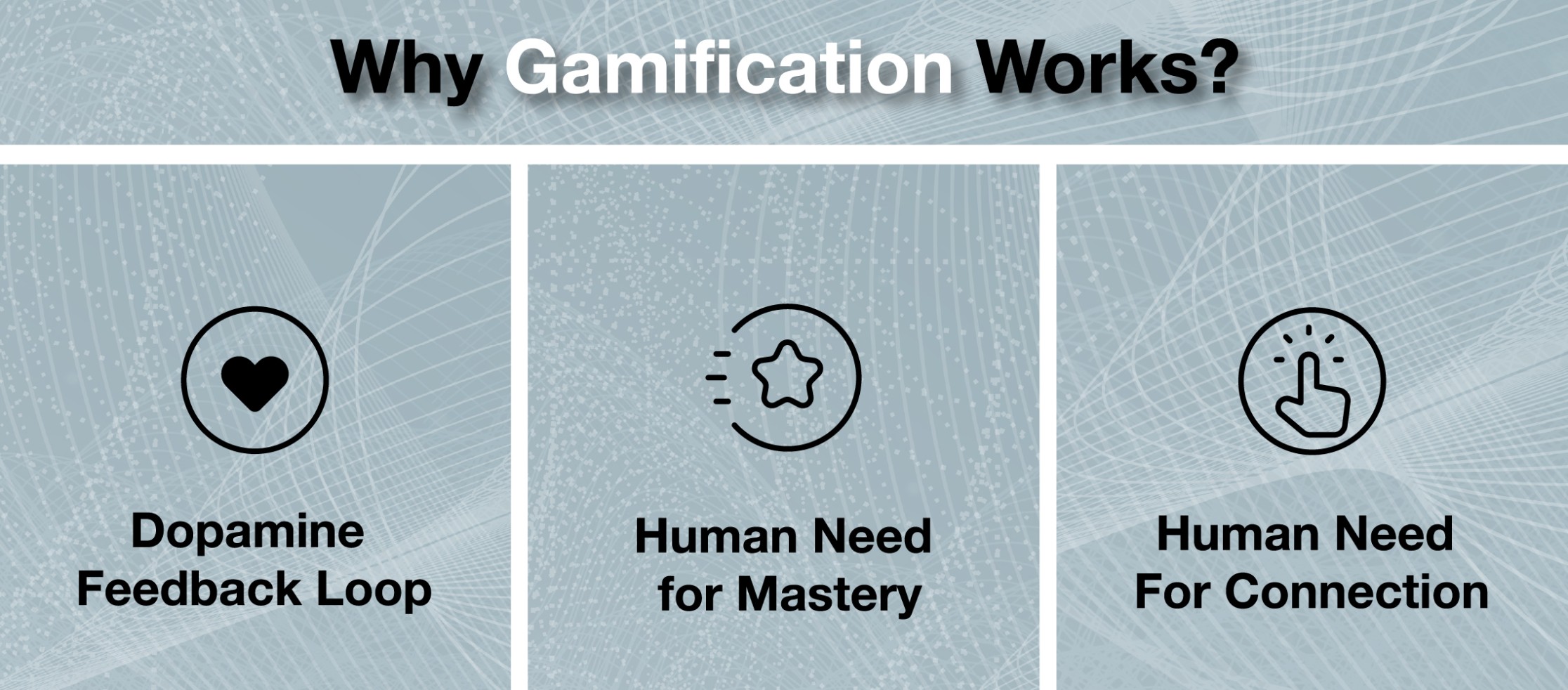
We didn't have pinball machines or PlayStation 5 at the dawn of time, but even our ancestors really liked to play. At its core, gamification taps into fundamental human psychological drivers. Our brains are wired to respond to rewards, achievements, and social recognition, all of which, well-designed games have mastered for centuries. Chess is similar to Sid Meier's Civilization in more ways than one.
The effectiveness of gamification stems from several key principles. There's the dopamine-driven feedback loop. When users complete tasks and receive immediate rewards, their brains release dopamine, creating a positive association with the activity. This explains why simple achievements like earning points or unlocking badges can be surprisingly motivating.
Our inherent need for competence and mastery makes gamification work, regardless of platform. Self-determination theory positions competency as one of our primal drives, essential to wellness. This is why progressive difficulty levels and skill-based challenges keep users engaged-they satisfy our natural drive to improve and master new skills.
Lastly, the human need for relatedness (back to SDT) is one more thing that makes us feel good when we're connected to other people (even if we're competing). Features like leaderboards, team challenges, and group achievements can powerfully leverage the desire for social recognition.
Real-World Applications Across Industries
The versatility of gamification becomes apparent when we look at its successful implementation across different sectors.
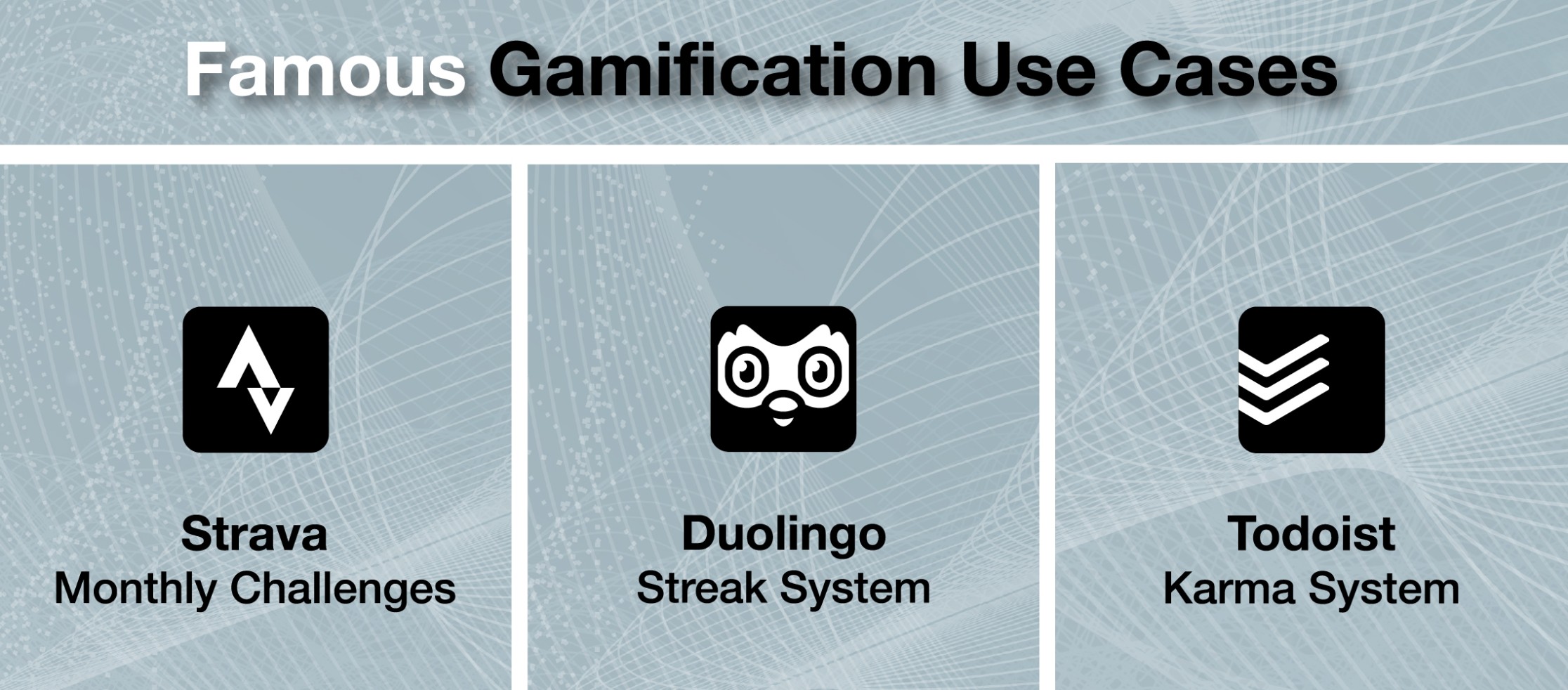
Strava and Garmin have masterfully integrated social gamification in health and wellness by transforming everyday activities into challenges. Every month, all users get fresh challenges like January 5k and 10k (run 5k or 10k). Some of these challenges are monthlong, and they encourage users to perform a number of activities or achieve a certain mileage.
Users earn colorful badges when they complete the challenge, creating a compelling mix of individual achievement and social competition. This event allowed Strava to team up with brands such as Brooks and NYC Marathon for time-limited challenges.
The education sector has seen remarkable innovations through gamification. Duolingo has revolutionized language learning by breaking down lessons into bite-sized challenges and rewarding consistent practice. Duolingo's streak system and experience points create a sense of progress, making users return to the app daily.
Even productivity apps are not immune to gamification. These elements are subtle yet effective in these apps. Todoist pays close attention to its UX/UI; it provides users with satisfying checkmark animations and sounds, while its Karma system with achievement levels helps users feel progress. Its competitor, TickTick, also uses a badge and progression system to award task management and customer loyalty via badges given away annually to Premium users. These elements tap into the psychological satisfaction of completing tasks without feeling forced or artificial.
Gamification plays a considerable part in e-commerce strategies. Platforms like Temu and Shopee have implemented different elements and successfully boosted user retention and engagement.
These days, even LinkedIn has games, and yes, Instagram has added achievements for content creators.
Technical Implementation of Gamification
The technical backbone of gamification requires several components. The foundation is a robust progress tracking system encompassing real-time progress updates, user statistics, achievements, and performance analytics.
This system needs well-designed reward mechanisms. This may include point systems, virtual currencies, badges and achievements, level progression, and unlockable content that provides genuine value to users.
Social features form another crucial pillar, with leaderboards, friend systems, team challenges, and social sharing capabilities. Sophisticated analytics integration must support these social elements, allowing for behavior tracking, engagement metrics, achievement statistics, and user journey analysis.
Gamification: Where to Start?
Starting small is crucial. Start with essential gamification elements, analyze engagement metrics, and ask for user feedback. This approach allows you to test what resonates with your audience.
Maintaining balance is equally important. The gamification elements should enhance, not overshadow, your product's primary functionality. Gamification is a seasoning.
The rewards you offer must feel meaningful within your product's context. A great example is the steps challenges in Garmin Connect, where you "reach the mountain peak" by climbing a certain number of steps.
Empty badges or pointless achievements won't drive long-term engagement. This value can be intrinsic, such as marking genuine progress or achievement, or extrinsic, like unlocking new features or capabilities.
Regular updates are essential to maintaining user interest. Fresh challenges, new rewards, and seasonal content keep the experience dynamic and engaging.
Our Very Own Reward System
During one of Klika's internships, the interns built an internal employee reward application. This coin-based system credited 50 virtual coins to each employee every month and encouraged them to award colleagues by sending coins. Employees were given a free choice; they could send all coins to one person or gradually award multiple colleagues. At the end of the month, the coins could be exchanged for real-life items such as lunch or books.
The mobile team ensured the application was available on iOS and Android, providing an equally smooth experience for all users. At a later stage, integration with Slack was added to make the reward and recognition program available on Klika's main communication channel.
The system also included automated notifications, analytics reports, and a modern user interface, making it easy to use and highly popular among employees.
We have observed a few positive effects caused by introducing the system; the first one was the creation of an "unofficial economy," which was self-regulated, the way the video game economies often are. Because users were required to enter reasons why they were giving away their coins to a certain person, the reward system created a sense of belonging and connection, with numerous humorous exchanges that happened over the years and even real-life lobbying for coins, all done in good spirits.
We also started working on Klika Token, our first blockchain project. As a successor to our reward system, this initiative will serve as a blockchain-based solution for the Ethereum-based networks that can be accessed through wallet and Web3-based frontend applications.
The token will offer a more robust and functional approach. It will be hosted on a private blockchain for development and testing purposes and later deployed to the mainnet. We envision using it in an internal webshop to purchase merchandise, meals, and coffee or facilitate value transfer within the company.
The Future Of Gamification
Gamification will evolve alongside technology. Augmented Reality (AR) integration opens up possibilities for location-based challenges and immersive experiences. AI-powered personalization enables more sophisticated, adaptive gamification systems that respond to user preferences and behaviors. Context-aware challenges make gamification relevant and engaging by adapting to users' real-world situations and environments.
Gamification is not childish; it is not about turning your product into a game. It is about understanding and leveraging human psychology, so the final results are more dedicated communities and happy users who enjoy the experience. So, game on!