

Headless CMS: What Is It Good For?
A few years ago, every project came with a cautionary tale, a label of sorts; if you don't make it "mobile-friendly," you're doomed. Today, it's not about being "mobile-friendly"; it is about having almost an instant output to mobile apps, IoT devices, interactive displays, and whatever screen has just been released as you read this article. The solution to this conundrum is implementing a little planning, which should lead to a headless CMS.
It is easy to define a headless CMS as a solution separating presentation (frontend) from the backend, but it would be much wiser to explain it via a simple analogy. For example, let's talk about the traditional (and excellent CMS) WordPress. When you use WordPress, everything is "fused" together, from the content you store to the presentation (how you display that content). WordPress will suit basic websites that are more or less static quite nicely.
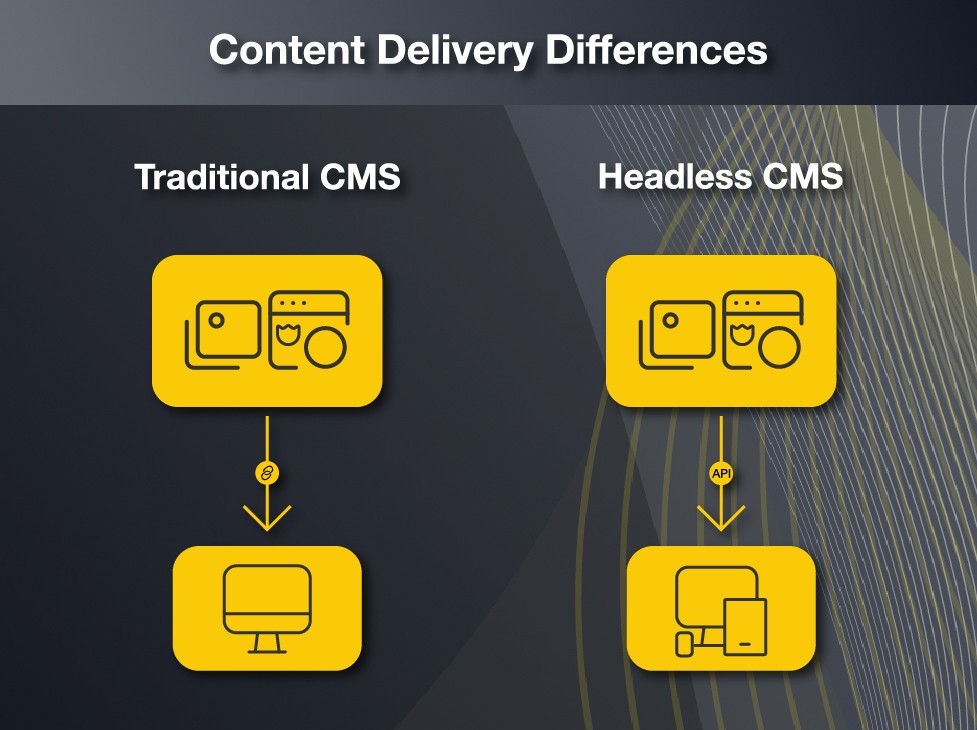
However, you may require the freedom to change stuff instantly and on a whim and deliver content to different devices via API. This is where headless CMS solutions shine. Headless CMS splits the backend (where your content is stored) from the frontend (how your content is presented). It is like creating a warehouse for your content, with consistent output wherever and whenever you need your data done via APIs, whether to your website, a mobile app, or something else entirely.
The great solutions don't come cheap but can cost way less when thinking ahead (not only regarding finances but headaches, too). Financially speaking, headless CMS can be a game-changer. Traditional CMS often requires much time and money for maintenance and hosting, especially as you scale up. Money is not the only issue here; the flexibility is getting lost by scaling up, especially if you're offering a product whose marketing depends on seasonal campaigns, new and innovative offers, etc. With headless CMS, you manage everything from one place, cutting down on operational costs.
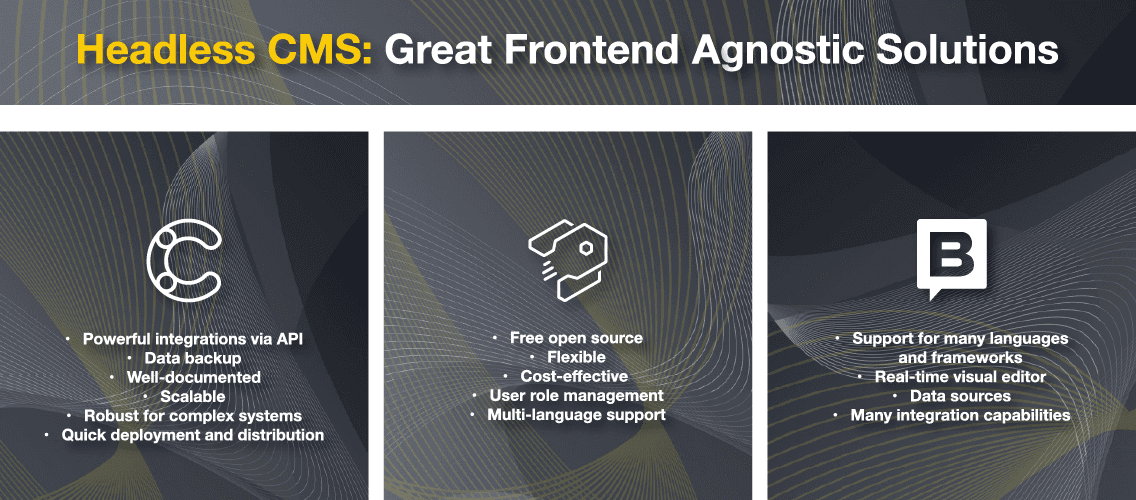
What's good about headless CMS in 2025 is that you'll have several powerful options to choose from. For instance, Contentful is known for its powerful APIs and developer-friendly tools. Lovers of open-source solutions will love Strapi. If you're into publishing, Ghost is proving to be another powerhouse, letting you earn by publishing written content and pushing it to the web or mailboxes as a newsletter.
In 2024, Nadina Hodžić, Klika's Team Leader (Cloud Services and Applications (Full-stack)), published an excellent overview of headless CMS technology, specifying how and why we used StoryBlok. StoryBlok has a range of features that vastly improved our partner's productivity, flexibility, and marketing efforts, resulting in an expansion of audience and coverage.
Developers love headless CMS. It allows them to use any frontend they find fitting for a particular case, speeding up development and enhancing the end-user experience. As businesses grow, headless CMS allows for extensions without system overhaul. The improved security is a plus; with the content management backend separated from the presentation, it reduces potential attack vectors.
Lastly, as proved in our particular case, the client's marketing team loves the new headless CMS. The team can now focus on creating quality content without fussing about platform specifics, and the system ensures consistency across all touchpoints.
Headless CMS is something you should consider if you're in a business characterized by fast-paced changes. Changing the CMS solution midway through is not a problem, but starting fresh with Headless CMS is even better. A little bit of planning goes a long way.